
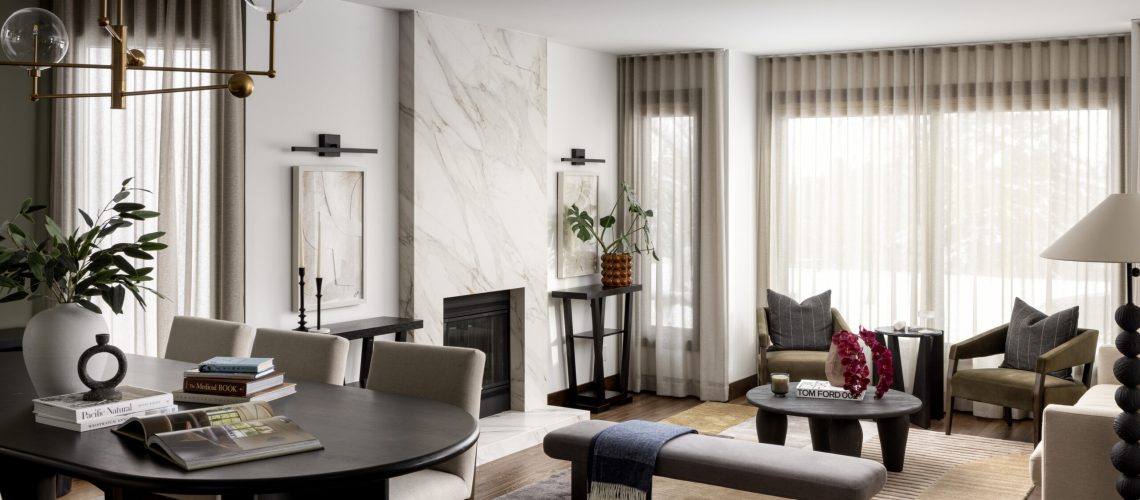

The Hamptons has always had a distinct identity. Built around The Hamptons Golf Club, the community was designed with an emphasis on larger homes, landscaped streets, green space, and properties that feel somewhat removed from the pace of the city around them. That setting is a big part of what continues to make the neighbourhood appealing. It also changes the renovation conversation. In The Hamptons, a renovation isn’t happening in isolation. The home is part of an established property and community that already carries a certain presence. The goal is to make sure what happens inside the home feels just as considered as everything around it.
In The Hamptons, the Property Should Influence the Design
Every property gives you something different to work with. For some Hamptons homeowners, that may be a golf course view. For others, it’s a private backyard, mature landscaping, an elevated lot, or simply the sense of space that comes with a larger established property.
Those features aren’t decoration around the home. They’re part of the home.
Renovating From the Property In, Not Just the Room Out
Most renovation conversations naturally begin inside. The kitchen needs updating. The ensuite feels dated. The flooring needs replacing. But in a community like The Hamptons, there’s value in zooming out before making those decisions. Consider the experience of the entire property. How does the home present when you arrive? What do you see when you enter? Which rooms overlook the best parts of the property? Where does entertaining naturally happen? How does the interior transition outside? Does the architecture, interior design, and landscaping feel like one property, or several separate pieces?
When those questions are answered early, individual renovation decisions become much easier to make.
Renovation Decisions That Matter in Hamptons Homes
Creating a Stronger Sense of Arrival
In larger established homes, the experience begins well before the kitchen. The entrance, staircase, lighting, millwork, flooring, and sightline from the front door all influence how the rest of the home is perceived. Rather than treating the foyer as a pass-through space, renovations can use it to establish the design language for everything that follows. The goal doesn’t need to be dramatic. It needs to feel intentional.
Designing Entertaining Spaces as an Experience
Entertaining in a larger home isn’t just about having enough room for people. It’s about how people move through it. The relationship between the kitchen, dining areas, living spaces, bar or beverage areas, outdoor spaces, and even the basement can influence whether entertaining feels effortless or fragmented.
Letting the Best Part of the Property Become Part of the Interior
For homes overlooking the golf course, the view is an obvious asset. But the same principle applies to properties with mature landscaping, private yards, interesting elevation, or particularly good natural exposure. The questions isn’t whether the home has windows; it’s whether the rooms you spend the most time in actually benefit from what’s outside them. Window placement, doors, furniture orientation, lighting, and room layout can all influence whether the exterior setting feels like part of the home or simply something beyond it.
Creating Continuity Between Interior and Exterior Spaces
On an established property, exterior spaces have often evolved independently from the interior. Landscaping changes. Decks get replaced. Interiors are updated. Outdoor entertaining areas are added later. Eventually, each element can be perfectly functional while the property as a whole feels less connected. A larger renovation creates the opportunity to consider those transitions together. Materials, sightlines, doors, covered areas, lighting, and outdoor gathering spaces can all help create a stronger relationship between the home and the property surrounding it.
Choosing Materials That Suit the Home Long-Term
A renovation in an established executive home should still feel appropriate years from now. That doesn’t mean avoiding personality or making everything neutral. It means being selective. Natural materials, well-proportioned millwork, quality cabinetry, considered lighting, and finishes chosen for the architecture rather than the trend cycle tend to give a home much more staying power. In a community that has already matured, the renovation should be designed to do the same.
Carrying One Design Direction Throughout the Home
Larger homes are especially vulnerable to becoming visually disconnected over time. A kitchen gets renovated first. The ensuite follows a few years later. Flooring changes. A basement gets updated. Lighting is replaced room by room. Every individual decision may look good, but eventually, the home itself lacks a clear identity. A more comprehensive renovation provides the opportunity to establish that direction before individual spaces are designed. That doesn’t mean every room needs to look the same. It means they should feel like they belong to the same home.
When the Golf Course is Your Backyard
For homes that back directly onto The Hamptons Golf Club, the setting creates a renovation opportunity that is genuinely unique to those properties.
The changing seasons become part of the view. Outdoor entertaining takes on a different character. Privacy, sightlines, landscaping, and how the home opens toward the rear of the property all deserve additional consideration.
Even interior decisions can change when the view becomes part of the design. Where should seating face? Which spaces deserve the strongest visual connection? How can you enjoy the setting in February just as much as you do in July?
A golf course property is something you can’t recreate through finishes or square footage. If you have it, the home should acknowledge it.
A Renovation Should Feel Like It Belongs to the Property
The Hamptons has had decades to become the community it is today. The trees have matured. The landscaping has developed. The properties have settled into their surroundings. The golf course has become inseparable from the identity of the neighbourhood.
Renovating within that context is less about making an older home look new. It’s about creating a home that feels considered from the street to the backyard, and from the architecture to the smallest interior decisions. Because when the setting is already one of the reasons you want to stay, the renovation should make the most of it.